
That Old Injury Is Probably Why You’re in Pain Now – Mississauga Osteopathy
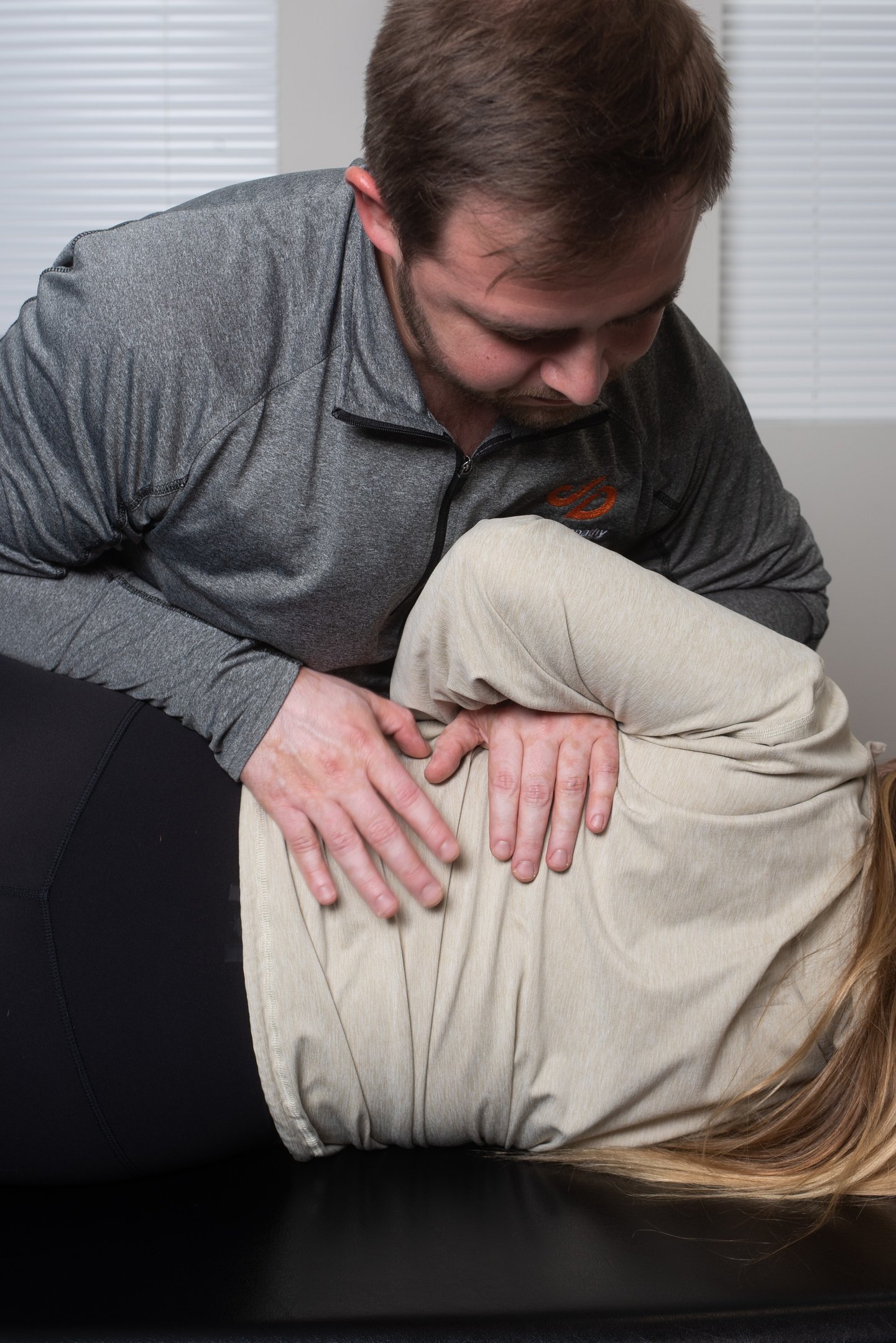
This is one of the most common things we say in clinic, and one of the hardest for patients to accept at first. You come in with neck pain that started six months ago. We spend time assessing your whole body and find significant restriction in your left ankle from a sprain you had four years ago. We work on your old injury you had on the ankle. Your neck gets better.
It sounds counterintuitive. It’s actually straightforward anatomy.
The body doesn’t heal injuries in isolation. It heals them in the context of everything else it has to do, which means it compensates. Every time the body can’t do what it’s being asked to do through one structure, it finds an alternative route through another. Those alternative routes work well enough in the short term. Over months and years, the old injury becomes the new normal. And then, eventually, the structure carrying the extra load reaches its limit and that’s where the pain shows up.
Not at the original injury site. Somewhere further up the chain.
How Compensation Patterns Develop
When you sprain your ankle, your body immediately reorganises to protect it. You shift weight to the other foot. Your hip on the injured side drops slightly to reduce load. Your pelvis tilts. Your lumbar spine compensates for the pelvic tilt. Your thoracic spine stiffens to manage the altered lumbar mechanics. Your neck muscles work harder to keep your head level despite everything shifting below.
Most of this happens automatically and unconsciously. By the time the ankle has healed, or healed enough that you stopped thinking about it, these old injury patterns are already established in your nervous system and your soft tissue. The ankle feels fine. But the compensation pattern it created is still running in the background.
Then something challenges the system, a particularly long day on your feet, a new gym program, a period of high stress, a different chair at work, suddenly the structure that’s been managing the overflow, your neck, your knee, your shoulder…it tips over its threshold. Pain appears. You have no injury to point to. Nothing happened. You just started hurting.
This is the presentation that frustrates patients most and is most commonly missed in conventional assessment. If you examine only where it hurts, you find a structure under load with no clear local cause. The local cause is somewhere else in the body, somewhere that healed years ago and left a compensation pattern behind.
Common Examples We See in Mississauga Patients
Old injury from an ankle sprain → knee or hip pain An ankle that healed with restricted dorsiflexion, the movement where your foot pulls up toward your shin, subtly alters gait mechanics with every step. You could have had an old running injury affecting your movement in the past. The knee and hip above it absorb the altered forces. Over thousands of steps per day, this accumulates into medial knee pain, IT band irritation, or hip loading that wouldn’t exist if the ankle were moving freely.
Whiplash from a car accident → chronic headaches Whiplash injuries affect the upper cervical joints, the suboccipital muscles, and the cranial mechanics in ways that often aren’t fully resolved even when neck pain settles. Years later, the neck restriction persists and contributes to headache patterns, or jaw tension causing TMJ pain, and upper thoracic stiffness that patients have never connected to the original accident.
Old rib injury → shoulder restriction The shoulder blade moves on the rib cage. When ribs are restricted, from an old impact, a previous chest infection especially with harsh coughing, or the postural habits that develop after protecting a rib injury. All of this contributes to the shoulder blade not being able to move freely. Impingement, rotator cuff irritation, and frozen shoulder can all be driven by rib mechanics that nobody has assessed because the rib injury happened years ago and was considered resolved.
Previous pelvic injury or surgery → low back pain Caesarean sections, hip surgeries, appendectomies, and pelvic injuries all create fascial adhesions and movement restrictions in the pelvis that can persist indefinitely. The lumbar spine, which depends on a mobile and symmetrical pelvis as its foundation, compensates around these restrictions, and eventually that compensation produces chronic low back pain with no obvious structural cause on imaging. Not traditional an “old injury” but older trauma that is seen as stress.
Childhood falls and injuries → adult presentations This is perhaps the most overlooked category. A significant fall in childhood that seemed to resolve leaves patterns in the body that are carried forward. We see adults in their 30s and 40s with chronic presentations that, when traced carefully, connect to an old injury sustained decades earlier. The body has been managing around them the entire time.
Why an Old Injury Matters for Treatment
If you treat where it hurts without addressing the old injury that’s driving the load, you’ll get temporary relief at best. The compensation pattern is still running. The structure you treated will be back under the same abnormal load the moment you return to normal activity.
This is the cycle that produces the frustrated patient who has tried everything; you’ve tried physiotherapy, or chiropractic care, and gotten short-term relief or tried massage therapy and unsure if its working for you, or if it ever resolves the underlying problem. Each treatment addressed the site of pain. None of them found the source.
Finding the source requires looking at the whole body — not just the current complaint but the history of every significant injury, surgery, and physical event. In osteopathic practice, the case history is as important as the physical assessment. We’re specifically listening for the moments where compensation patterns are likely to have started.
How Osteopathy Traces an Old Injury
At JD Osteopathy in Mississauga, our initial assessment always includes a thorough history — not just “where does it hurt and when did it start” but “what has happened to your body over your lifetime.” Old injuries that patients mention almost apologetically “well there was that ankle thing years ago but that’s fine now”, are often exactly what we’re looking for.
The physical assessment then looks for the mechanical signatures of those old injuries: restrictions in range of motion, asymmetries in tissue quality, movement patterns that favour one side, areas of the body that feel protected or guarded even when the patient isn’t consciously aware of guarding them.
Treatment addresses both the current pain because that’s what brought you in and it needs to be managed and the underlying patterns driving it. Restoring mobility to an old ankle injury, releasing a fascial restriction from a surgical scar, or freeing up a rib that’s been stiff since a fall ten years ago can produce changes in seemingly unrelated areas of the body that patients find remarkable.
Ready to Find the Real Source of Your Pain?
If you’ve been dealing with a pain that doesn’t have a clear cause — or one that keeps coming back despite treatment — there’s likely something in your history that hasn’t been properly assessed. That’s exactly the kind of presentation osteopathy is built to address.
JD Osteopathy is located at 5025 Orbitor Drive, Building 1, Unit 101 in Mississauga, and 3141 Walkers Line in Burlington. No referral required.
Book Your Appointment in Mississauga
Book Your Appointment in Burlington
JD Osteopathy serves patients across Mississauga and Burlington. Our osteopathic practitioners hold a Master in the Practice of Osteopathic Manipulative Sciences (M.OMSc.) from the Canadian Academy of Osteopathy – the highest level of osteopathic education available in Ontario. Requirements involve over 4,200 hours of intensive education and clinical training. This ensures you receive care that is not only effective but also grounded in a deep understanding of anatomy, physiology, and the body’s interconnected systems.
About the author: Dmitro Jovnyruk, M.OMSc. is an Osteopathic Manual Practitioner and Founder of JD Osteopathy with clinics in Mississauga and Burlington. His practice focuses on identifying the underlying mechanical causes of pain and discomfort through osteopathic assessment and treatment. Read Full Bio
2 Comments
Comments are closed.