
Sports Injury Osteopathy for Pickleball and Weightlifting: Why It Hurts Where It Does
The short version: Most pickleball and weightlifting injuries I see don’t start where they hurt. They start with a restriction somewhere else, a hip that won’t rotate or a spine that won’t turn, and the painful area is the part working overtime to make up for it. Sports injury osteopathy looks for what isn’t moving, frees it up, and gives your body more room for error at full speed. Keep moving if it doesn’t hurt, take 24 hours off after a treatment, warm up with the movements you’re about to do, and see a doctor first if anything feels outside your normal.
Who comes in with pickleball injuries and weightlifting injuries
Three groups come through the door most often.
- Pickleball players, usually 40 and up. Most aren’t new to the game. They’ve started playing more often and more competitively, and they come in with ankle, knee and hip pain.
- Newer pickleball players. They’re learning a new racket sport and overusing their arms, so it shows up as shoulder pain, forearm pain and elbow pain.
- Lifters, usually under 40. Regular gym training and high-intensity classes like CrossFit. The problem tends to show up in deadlifts, squats and bench press.
If you run or golf, the same idea applies. See running injuries near Centennial Park and why your golf swing causes pain.
Why pickleball injuries happen
Pickleball asks your feet to go one way and your upper body to turn another. Your lower body plants, then you rotate to swing the paddle. That’s challenging on its own. Doing it quickly, again and again, is where errors happen.
When I assess players, I usually find restriction and rigidity in bending and rotation. If the top half of the body is restricted, the bottom half has to do more, and the reverse. So a player twists far more than they should need to, just to get the paddle where it has to be.
My job is to reduce those restrictions so there’s more wiggle room and allowance for those errors, because the body isn’t dealing with other things at the same time.
Interactive
Where does the twist go?
Every swing needs the same total rotation to get the paddle where it has to be. When one area can’t turn, the others make up the difference. Pick a pattern to see where the extra work lands.
Rotation is shared across the body, so no single area works overtime. That leaves room for error when you have to react at full speed.
Bar length shows how much of the swing’s rotation each area takes on. Illustration only, not a measurement.
Why weightlifting injuries aren’t always bad form
Compound lifts need stability and a lot of moving parts working together. When something doesn’t work, the error reveals itself during those lifts. Most lifters assume they have bad form or lifted funny.
Strict form matters. But if there’s already a restriction in the hips, spine or shoulders, a lifter will force a textbook, symmetrical setup anyway. They fix their spine in a position their body doesn’t want to go into. Textbook form isn’t neutral for that body.
Take a deadlift. Say the spine has a rotation going one way, but the lifter stands squarely centred. Before they lift anything, they’re already in a relative twist, because the body wants to stay on its path of least resistance. Add weight, then ask the spine to straighten up through the pull, and the forces compound.
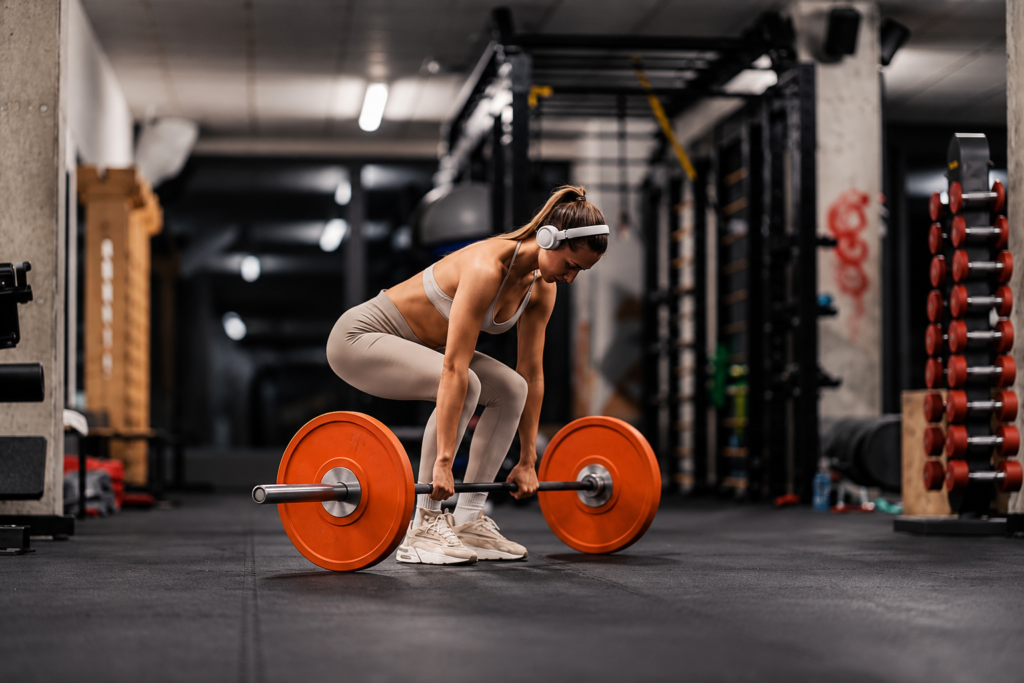
A pattern I see often: the squat that hurts the lower back
A lifter sets up for a barbell back squat with their feet straight and parallel to their shoulders. In a perfect body that works, and it’s what they’ve been taught. Here’s how it goes wrong when there’s a restriction in rotation:
- The setup locks in a twist. The restriction is sometimes in the shoulders and upper spine, sometimes in the lower back. Setting the feet square locks the pelvis and hips in place, and the bar sits parallel to the feet. They’re starting in a twist without knowing it.
- The squat adds more. The spine has to bend forward and back on top of that twist, so several errors stack up.
- The lower back braces. The abdominal muscles brace to keep the spine sturdy. If the spine can’t move above and below that braced section, there’s almost no room left for movement.
- The tissue reacts. It can’t take that much strain, so it responds with a spasm or an intense contraction trying to counterbalance the error.
If your pelvis already sits rotated or tilted before you load the bar, here’s how a pelvic tilt changes the way you stand.
That’s why the place it hurts is sometimes irrelevant to finding the cause. The better question is what isn’t moving correctly, not which area is reacting to it. The painful area is more likely than not the reaction to a restriction somewhere else. It’s the same reason treatment often starts away from where it hurts.
In treatment, I make sure the shoulders and head move as well as the pelvis and legs, so the spine isn’t stuck taking up the slack. I also explain that foot placement is a guideline, not a strict rule. That isn’t permission to get sloppy. It’s room for the body you have.
Once the restriction is cleared, most people can get back to their normal movement. If it’s been there a long time, the muscles may be uneven from favouring one side. Warm-ups help show where that is, so you build strength in both directions and on both sides. If your lower back is where it shows up for you, here’s how I approach lower back pain treatment in Mississauga, plus my practical guide to back pain.
Can I keep playing or lifting while I’m being treated?
Yes. Movement is always encouraged, as long as it doesn’t hurt while you’re doing it. We don’t want to irritate the body further.
After a treatment, things usually move better, but your body still needs to adapt. By default it guards against change at first. So:
- Skip playing or training for at least 24 hours after a treatment.
- When you go back, ease in. Don’t jump straight into a full match or a heavy session.
- Warm up properly, so your body gets used to the new position.
Everything here is about letting the body acclimate while it’s still adapting. If you feel sore after a visit, here’s why you can feel worse after a treatment and what’s normal.
How many sports injury osteopathy sessions will I need?
The approach stays the same from visit to visit. What changes is what I’m working on, and there’s usually less to do each time.
- First few visits: about once a week, while the bulk of the restrictions improve.
- Once the big movements are free: every 2 to 3 weeks, so your body has time to adapt.
- After that: maintenance only, once a season or every couple of months, depending on how hard you play or train.
What decides the number is whether restrictions are still stopping your body from moving properly. You’re already doing a lot of the heavy lifting, no pun intended, by moving and doing what you love. My job is to make sure nothing is in the way of that.
Sports injury osteopathy is guided by what I can find and feel: where motion is restricted. It isn’t guided by pain alone, because pain tends to show up when it’s already too late and the body can’t adapt. The goal is to get ahead of that, so that even if a new restriction comes along, it doesn’t throw the whole system into pain and your body can handle that stress on its own. It’s always easier to address an issue before it gets bigger.
What should a good warm-up do for weightlifting and pickleball?
A good warm-up has three jobs:
- Raise your heart rate.
- Get your nervous system ready to exercise.
- Copy, in a controlled way, the movements you’re about to do.
It should build gradually, not start hard. The point is to ramp up the movement so your nervous system is ready to go. Showing up, doing a few static stretches and going straight into the workout doesn’t do that.
For lifters: before deadlifts, go through the motion of squatting down and coming back up, even into a jump. It’s a natural way to get the extension you’re about to load.
For pickleball: move forward and back, then shuffle side to side to get your hips and feet used to the directions you’ll play in.
A warm-up is also a test. If side to side feels hard or uncomfortable, spend more time on it and see if it loosens. If it doesn’t, take that as a signal to get help instead of forcing your body into positions it isn’t comfortable in. At full speed you won’t be thinking about any of this, and something that was already uncomfortable in the warm-up carries a higher risk of injury.
Between visits, the self-check is simple: is it easier to move forward, back, left and right, and do your lifts or your game feel easier? The goal is for you to stop thinking about it and stop overanalyzing every movement.
When to see a doctor first
Some signs need a medical check before any hands-on treatment. Hands-on assessment tells me a lot, but there are things the eyes and hands can’t see reliably, and a doctor can clarify what’s going on for your safety.
Go to emergency or call 911 if you have:
- chest pain, trouble breathing, or a racing or irregular heartbeat during or after exertion
- loss of bladder or bowel control, or numbness in the groin or inner thighs, especially after a back injury
See your family doctor or a walk-in clinic first if:
- you can’t put weight on the area, or it hurts to move
- the area is hot, red, burning or swelling
- there’s numbness, tingling or loss of sensation
- anything feels outside your normal after an acute injury
If you’re in doubt, see your doctor for your own peace of mind. We can pick up where we left off after your checkup. If you come in with any of these signs, I’ll refer you to a medical professional and rebook your appointment.
The one thing to remember…
Whether you’re 20, 45 or 65, getting out there and moving is the hardest part. Pain from playing or lifting doesn’t always mean you’re doing something wrong. You’re challenging your body, and it has to adapt, get challenged and grow from that.
Sometimes an injury from years ago never fully settled. Your body found a workaround, and new activity like pickleball can wake it back up. That old injury you forgot about may be part of the picture.
Osteopathy is about removing the obstacles in your way, new or old. We’ll chip away at them one bit at a time so you can keep doing what you love. Your body is on your side, always. There’s nothing wrong with you. Your body is just working too hard so you can keep doing what you want. My job is to take things off its plate so it can do that more easily.
Frequently asked questions
Can manual osteopathy help with pickleball injuries?
It can help when restricted movement is part of the problem, which it often is. I look for where your body isn’t moving freely, such as hips or a spine that won’t rotate, and work on that so the painful area isn’t overloaded. If something needs a medical check first, I’ll tell you.
Should I stop lifting if my back hurts?
Keep moving if it doesn’t hurt, but don’t push through pain or add weight while something feels off. Ease back in with a warm-up that copies the lift. Go to emergency for any loss of bladder or bowel control.
How soon after a treatment can I play pickleball or train?
Wait at least 24 hours. Then ease back in with a gradual warm-up so your body can get used to how it’s moving now.
Do I need a referral, and is it covered?
No referral is needed. Manual osteopathy isn’t covered by OHIP, but most extended health plans cover it. Here’s whether osteopathy is covered by OHIP or insurance in more detail.
Book an appointment
If pickleball or lifting has started to hurt, book an assessment at the Mississauga clinic. Here’s more about manual osteopathy in Mississauga.
- Book in Mississauga (5025 Orbitor Drive)
No referral required. Initial $120, follow-up $85.
JD Osteopathy is a manual osteopathy clinic in Mississauga, focused on finding why it hurts, not just where.
About the author: Dmitro Jovnyruk, M.OMSc., is a manual osteopathic practitioner trained at the Canadian Academy of Osteopathy and the founder of JD Osteopathy.